 News
Pleasepoint achieves AWS Retail Competency
Pleasepoint achieves AWS Retail Competency, technical validation confirming our excellence in retail AI.
News
Pleasepoint achieves AWS Retail Competency
Pleasepoint achieves AWS Retail Competency, technical validation confirming our excellence in retail AI.
A new chapter: what we know how to do, inside your company
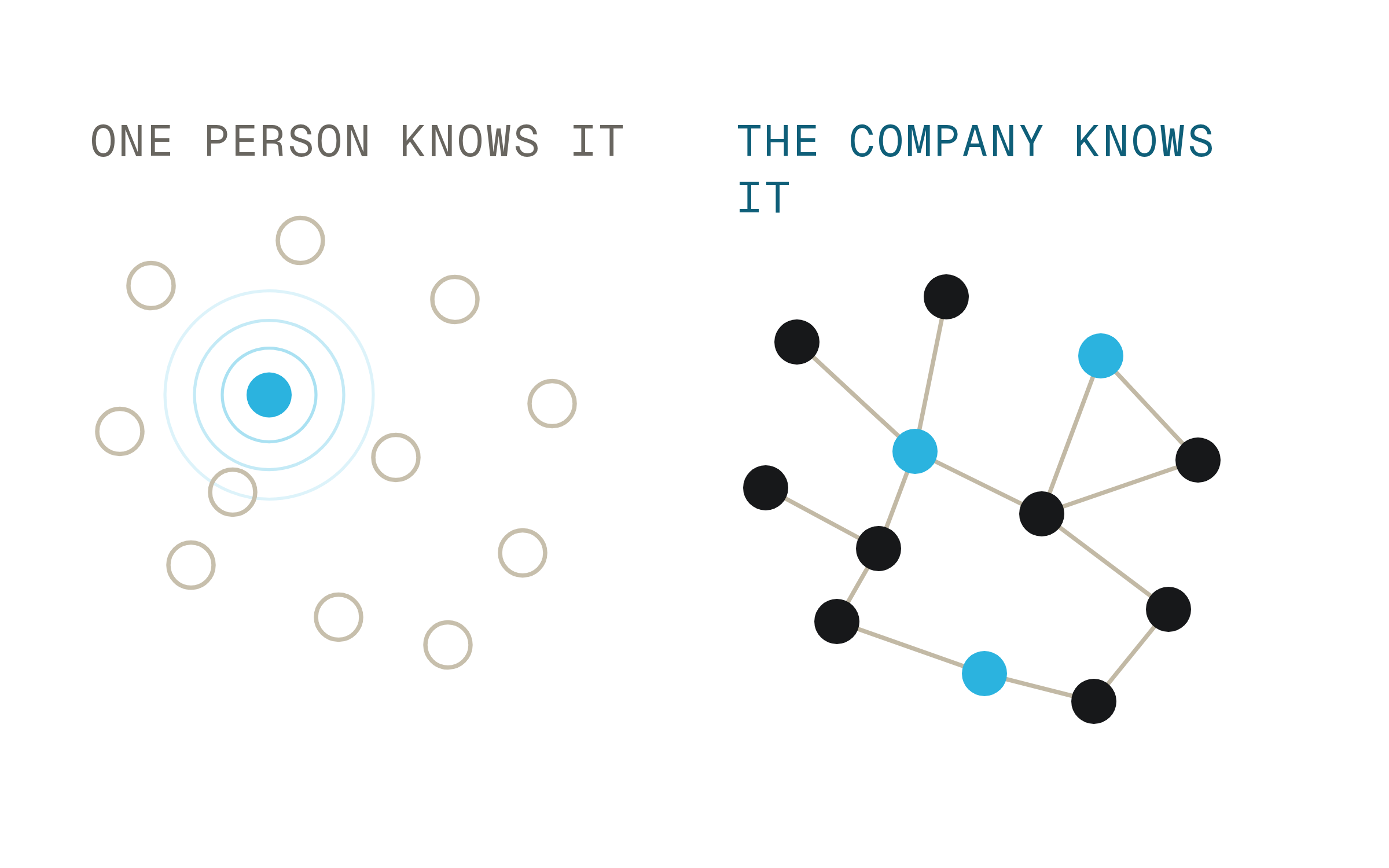
We are launching a new site. The change behind it fits in one sentence: for years we introduced ourselves through what we had built; from today, through what we leave running inside your company. Telling that properly means telling what we learned on the way here, and that is what follows.
The first thing we learned: the model is not the hard part
We built a customer data platform with predictive and generative models and put it to work for Condis, Norauto, Nescafé, Legálitas, Flormar and Real Sociedad. AWS audited and validated it. We built a wifi product for small businesses that Telefónica sells. And then product of our own: MyOutfits, presented at AWS Summit 2025, and StocksReport, which today supports a community of more than a thousand members with one person on the team.
Four different roads that taught the same thing: in none of them was the model the bottleneck. Choosing it took an afternoon. What took months was everything else.
That "everything else" has three layers, and none of them is optional.
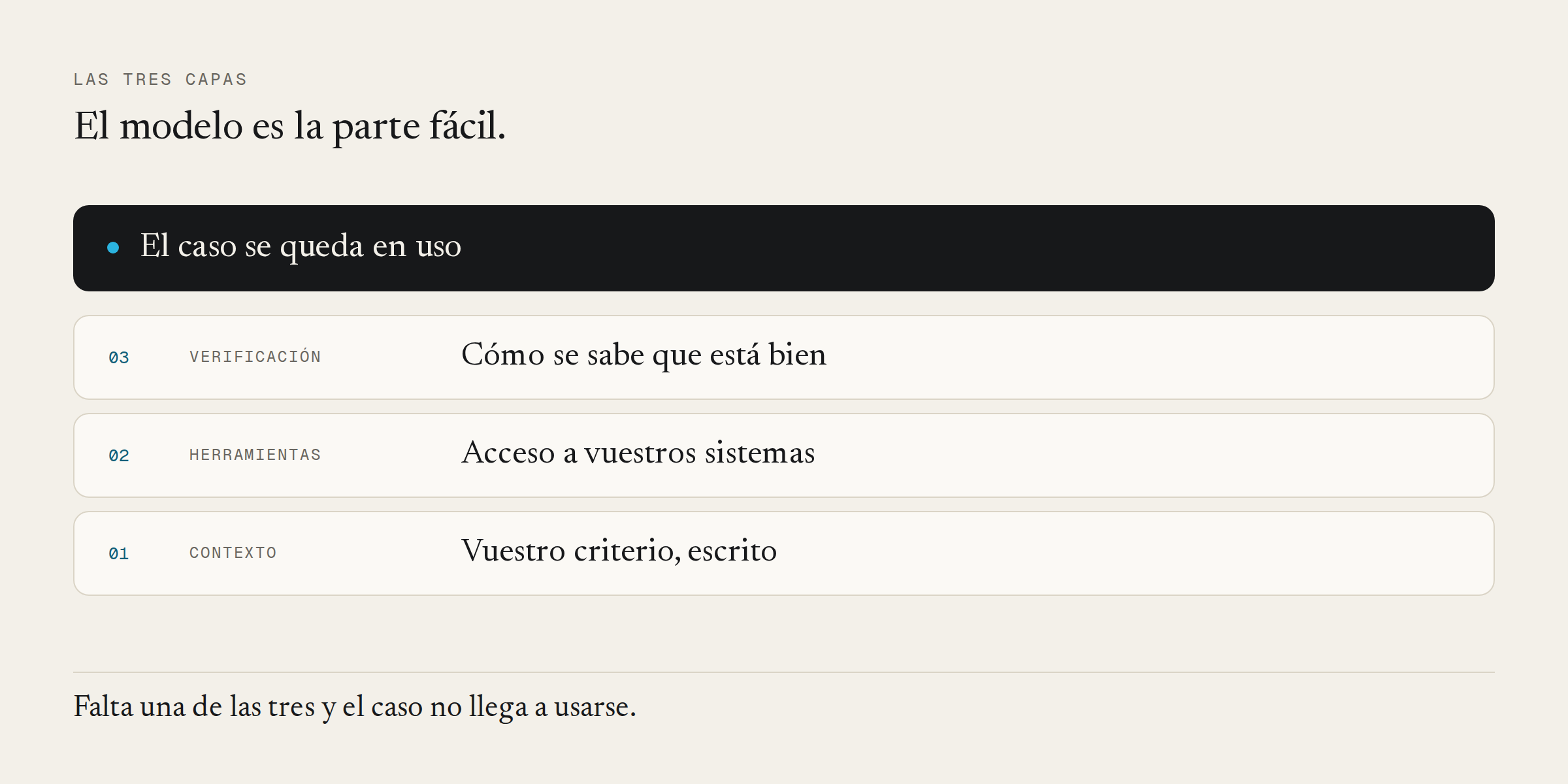
Context is the company's criteria written down, in a document the AI reads on its own before every task. It is not a manual, it is a specification. "Try to keep it short" is useless; "fourteen words per sentence maximum, and if it goes over, redo it" works. A table saying which words your company uses and which it never uses is worth more than three paragraphs explaining brand tone.
Tools are access. An AI that only drafts forces someone to copy the result somewhere else, and that is where most of the time you were trying to save goes. With access to the ERP, the CRM, the document folder or the repository —permissions by role, a log of what it reads— the task finishes where it starts.
Verification is how you know it is right without reading all of it: a total that has to add up, a format that validates, a rule that checks itself. "Looks fine" is not verification, and without verification there are only two endings: either nobody trusts it and the case is dropped, or somebody trusts it too much and the error leaves the company.
This is where the change comes from. What a company is missing is not another AI product: it is someone to build those three layers inside the systems it already has. That does not come in a licence. It gets implemented.
The second: the first case decides all the others
The first case is not the most ambitious one. It is the one that teaches the company to work this way, which is why it is chosen on criteria and not on enthusiasm. We filter it with five questions, and all five have to come back yes.
- Does it happen every week? If it comes round once a quarter, nothing accumulates and nobody picks up the habit.
- Does it need judgement that today lives in one person? That is where the value is. A purely mechanical task is cheaper with ordinary automation.
- Can you say whether it is right without arguing? There has to be a check that does not depend on who is looking.
- Does the data it needs already exist? If starting requires a data project first, that project is a different thing and it comes after.
- If it goes wrong, does nothing break? The mistake has to be caught inside, not in front of a customer.
And one disqualifying sign that saves months: if nobody can explain how it is done well today, it cannot be implemented yet. Writing comes first.
The mistake we have seen most, and made ourselves, is starting with the hardest case: the most exciting one and the worst teacher. Applying these questions across a company does not produce one case, it produces a list ordered by impact and effort. That is why the first phase of an implementation does not end in a report: it ends in that prioritised queue and in the decision of which case goes first.
The third: the only thing that accumulates is written criteria
Once the case is chosen, everything depends on a four-step loop. Anyone does the first three. Almost nobody does the third, and it is the only one that leaves anything behind.
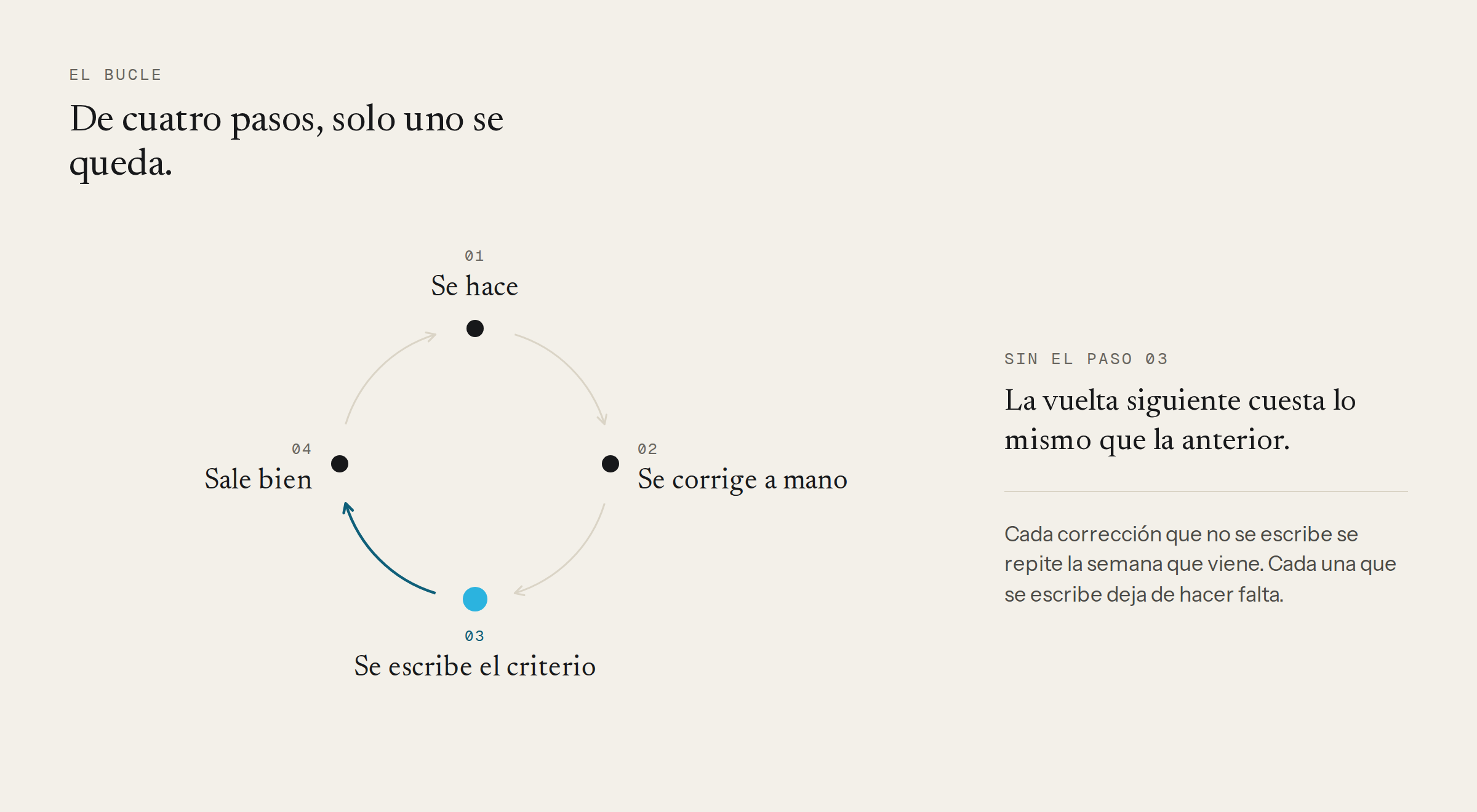
You do the task with the AI. It comes out mediocre. You fix it by hand, and that is where most people stop, with the feeling that AI does not quite work. The step that changes everything is writing that correction where the AI will read it next time: it stops being today's fix and becomes the company's criteria.
The consequence is measurable and hard to argue with. Every correction made by hand and not written down gets made again next week. Every one that is written down never comes back. Two months in, two teams that started the same are in very different places, and neither the tool nor the model explains it.
This is also what a training worth its name teaches: not how to use a tool, but how to close that loop on the tasks the team already has on the table.
We want to thank Pleasepoint enormously for the agentic AI training they gave our team. It has been a real turning point in how we understand and apply agentic AI day to day. Thanks to their vision and method, we have not only streamlined processes, we are also getting far more out of tools we were not making the most of before. A 10 out of 10 for practicality and inspiration.
That session is told in full, with the material we used, in the write-up of the training with the Condis team. It also answers the question every IT lead asks: what happens when the person who knew leaves. If the criteria are written down, nothing happens. They stop living in people and start living in the company.
What it looks like on one real task
Method up to here. This is what it looks like applied to one business task and one technical task, told end to end. What is struck through is the manual work that disappears; where a person is still working nothing is marked, and in both a person decides at the end.
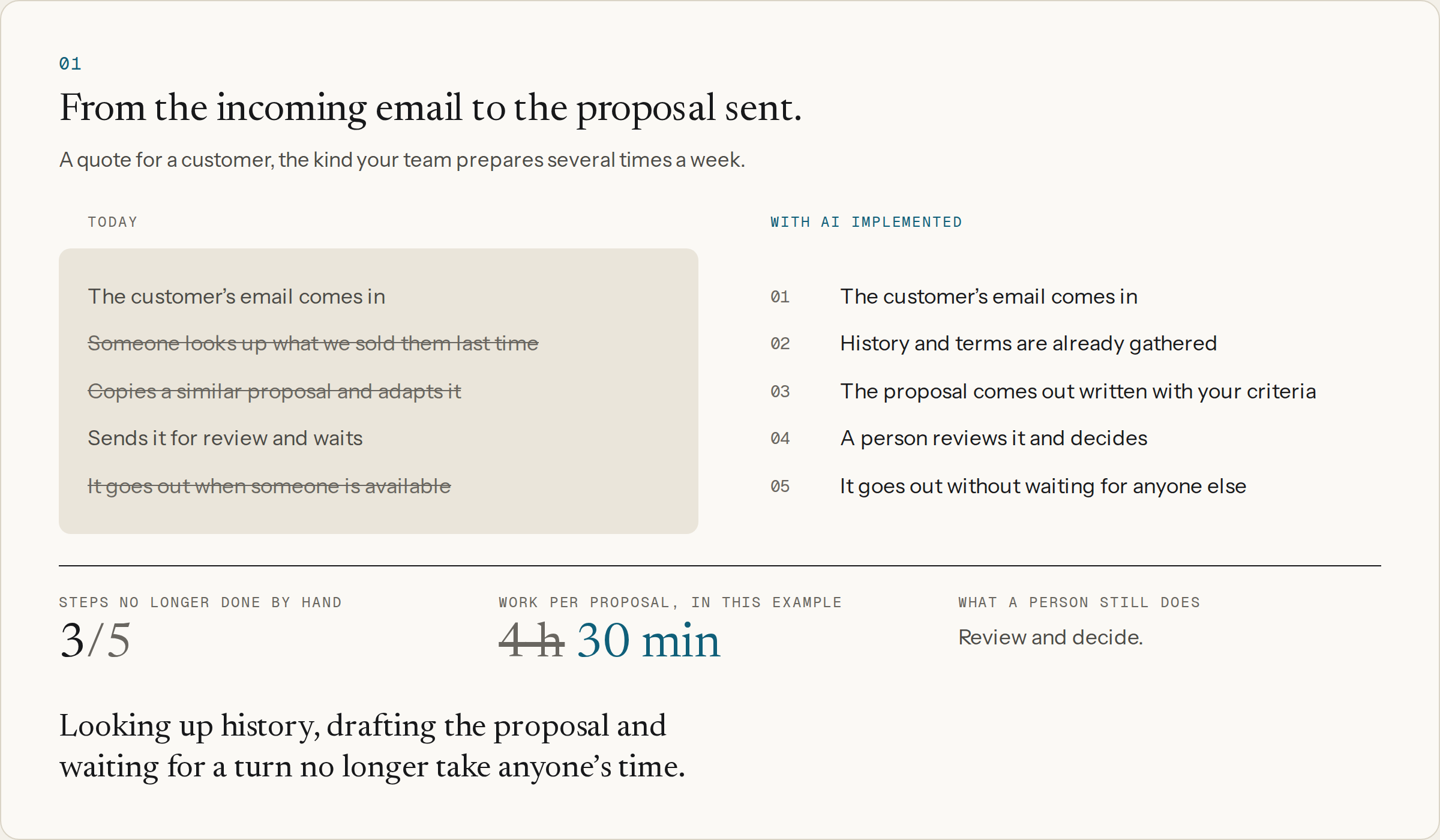
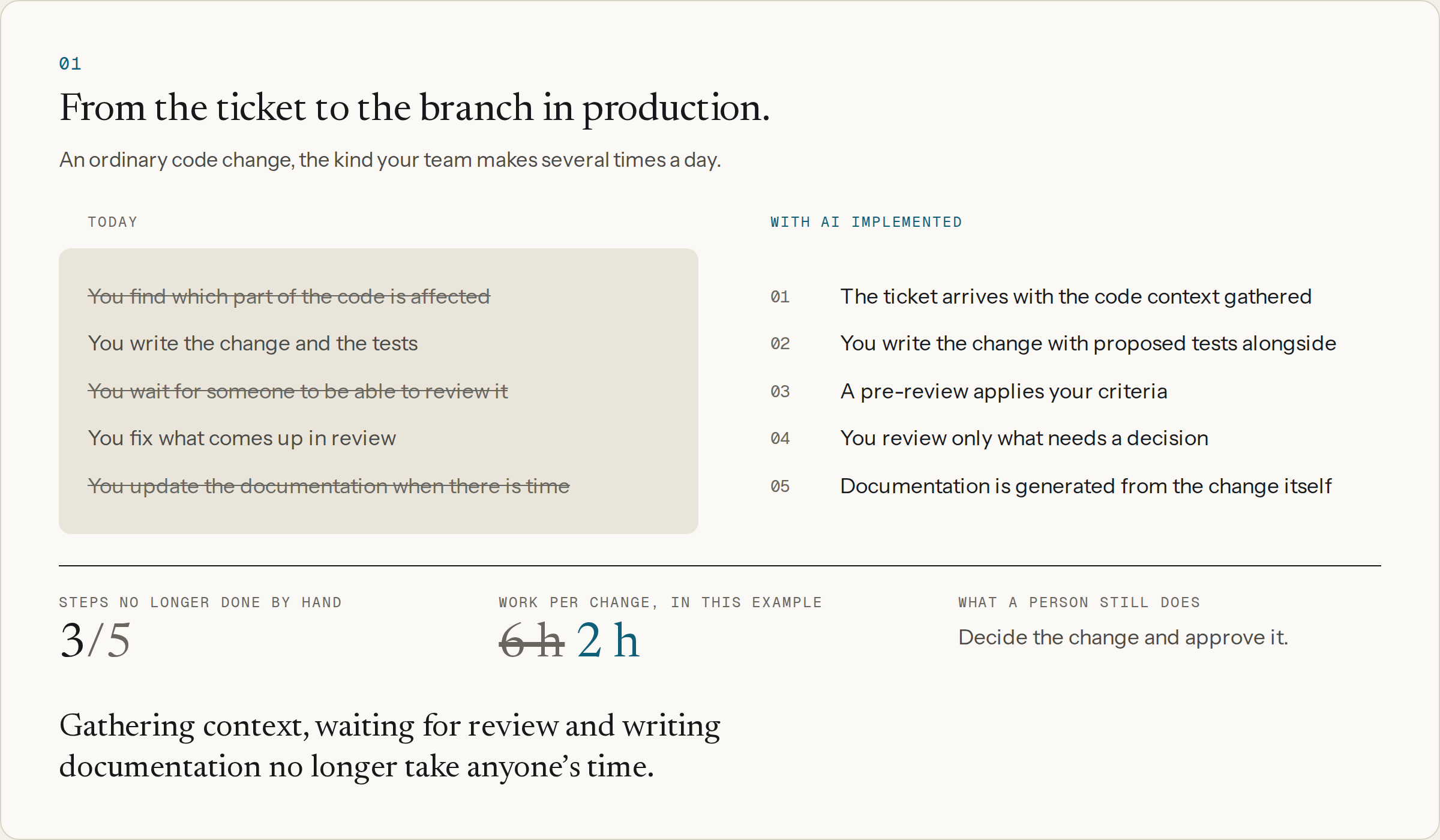
These are two of the five cases we start with most often on each side. In business and operations: preparing a quote, answering a customer, closing the report, sorting the inbox and publishing. On technical teams: shipping a change, serving the business, resolving an incident, adding a feature and redesigning a screen.
All ten are told the same way as these two, with what it takes to implement each one, what to measure and when it is not worth it: the five for business and operations and the five for technical teams.
Where it shows, and what to look at
A good implementation shows up in three places, and a different profile measures each one. If you run the business, the row that matters is the last one. If you lead IT, the first.
| Side | What changes | What to measure |
|---|---|---|
| Technical | AI enters the repository, the ticket and the review. It is defined where the data lives, who has access and what gets logged. | Questions that stop reaching the team's queue. Time from a change being asked for to it being in production. |
| Operational | Work stops waiting for one particular person to be available, and comes out the same whoever does it. | Time from a request coming in to an answer going out. Rework. Results that pass verification first time. |
| Business | The same headcount handles more volume with the same criteria, and growing stops meaning hiring. | Volume handled per person. Cases in production and people using them every week. |
With one condition almost everyone skips: if you do not measure before, afterwards there is no way to know whether anything changed. The before picture costs a few hours and is taken in the first phase, while nothing has been touched. At the end it is worthless: nobody remembers how long it used to take.
What we do with all of this
The above is the work. It is organised into three lines, with a catalogue of cases in front.
- AI implementation. We pick the first case with those five questions and build the three layers inside your systems, until the team uses it without us there.
- Training. Small groups closing that loop on the tasks the team has pending that week, with your tools and your access.
- Custom development. When the missing layer does not exist: data platforms, models, agents and MCP servers, integrations and applications. With the code in your repository from day one.
In front of all three sits the catalogue, sorted by the part of the company each case affects. And what we need from your side is small: a few hours from whoever does that work every day, read access to what you already have, and a decision at the end of each phase. If a case does not work, it stops and another one comes in.
None of the earlier work is being retired. The platform keeps running with its clients and its own section; predictive marketing and one-to-one personalisation are still cases we implement; the relationship with AWS is unchanged. What changes is the reading order: implementation is the front door, and everything built is the evidence that we know how to do it. The projects are all published, and Resources brings together everything written since 2020, now classified and filterable.
First step, this week and without calling anyone: take the task your team has repeated most this month, write down in a document how it is done well —checkable rules, not advice— and define how you will know a result is correct. That gives you the two layers that cost the most. The third is granting access and running it.
If you would rather not walk it alone, you can ask for information from any page. No commitment, talking to the people who will do the work, and if it is not a fit, we will tell you.
What changes today is the front door. What sits behind it is the same work as always, put where it does the most: inside your company.
Keep reading
News
Pleasepoint achieves AWS Retail Competency
Pleasepoint achieves AWS Retail Competency, technical validation confirming our excellence in retail AI.
 News
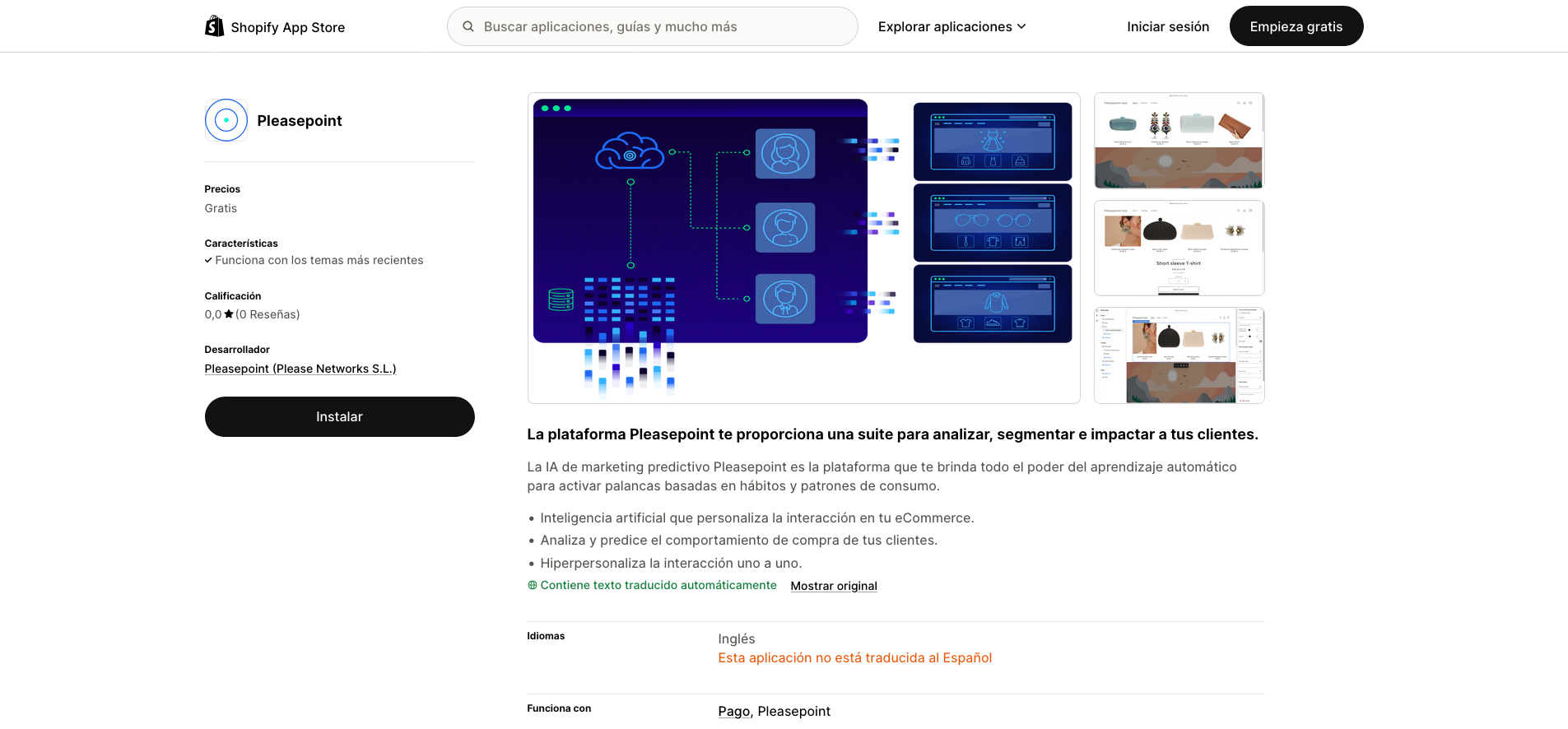
Launch of Pleasepoint Native App for Shopify
Personalize your Shopify one-to-one with Pleasepoint in real-time using AI and reinforcement learning.
News
Launch of Pleasepoint Native App for Shopify
Personalize your Shopify one-to-one with Pleasepoint in real-time using AI and reinforcement learning.
 News
MyOutfits launches 300+ free models for fashion diversity
MyOutfits launches 300+ free models to democratize diversity in fashion.
News
MyOutfits launches 300+ free models for fashion diversity
MyOutfits launches 300+ free models to democratize diversity in fashion.
Shall we talk about your case?
Tell us how your team works today. We will tell you whether there is something worth implementing, and if there is not, we will tell you that too.
No commitment
You talk to the person who will do the work
If it does not fit, we tell you