Service
AI in production in your company, not in trials.
We look at how you work and choose the first case. We build it inside your systems and stay until your team uses it on its own.
Not a pilot. A working case, and the criteria to choose the next one.
We have spent years putting AI into production for companies that cannot afford for it to fail.
AWS technology partner












What gets implemented
Concrete cases, not an AI programme.
See the full catalogueEach case is described with what it takes to implement it. The catalogue is ordered by the part of the company it affects.
The path
One case goes into production, and the next one follows.
The first phase produces a prioritised queue of cases. Getting it running and ongoing support repeat with each case, and every round leaves one more working.
What changes in everyday work.
See the cases with their hoursReporting and follow-up
Per report
Today6 h
With AI implemented45 min
Living documentation
Per release
Today4 h
With AI implemented20 min
What to offer, and when
Per campaign
Today8 h
With AI implemented2 h
These are the hours from the example each case publishes in the catalogue, not a client average.
Phase 01 · Where to start
Look at how you work before implementing anything.
Not a report. It ends in a session where you decide what gets implemented first.
- 01 We talk to the people who do the work.
- 02 We look at the tasks with the screen in front of us.
- 03 We prioritise with you in one session.
What you receive
The prioritised queue of cases
A table you maintain yourselves.
The map of systems and data
A diagram and a list of access points.
The decision in writing
A one-page record: what goes first and why.
Phase 02 · Getting it going
The first case, into production and into daily use.
The success criterion is not that it is deployed. It is that it gets used every day without us.
- 01 We build on what you already have.
- 02 We integrate it where work already happens.
- 03 The people who will use it test it.
- 04 We train the people who use it every day.
What you receive
The case in production
Inside your systems and with your access.
The measurement of what has changed
A short dashboard, with the indicators agreed before starting.
The operating manual
Written while it is built, not at the end.
Phase 03 · Ongoing support
Keeping the pace once we step back.
Not maintenance. It is what turns an implementation into a capability of your own.
- 01 Regular sessions with the teams that use it.
- 02 We resolve whatever is slowing adoption.
- 03 We bring what is new into your cases.
What you receive
The updated queue
The same table, revised with what has been learned.
Usage tracking
Who uses it and what is no longer done by hand.
People on your team who lead it
Named people, not a role on an org chart.
Where it is running
The method is judged by what it leaves running.
See all projectsFour different companies and four different cases, with the same path behind them. Each one has an article on what was implemented and what changed afterwards.
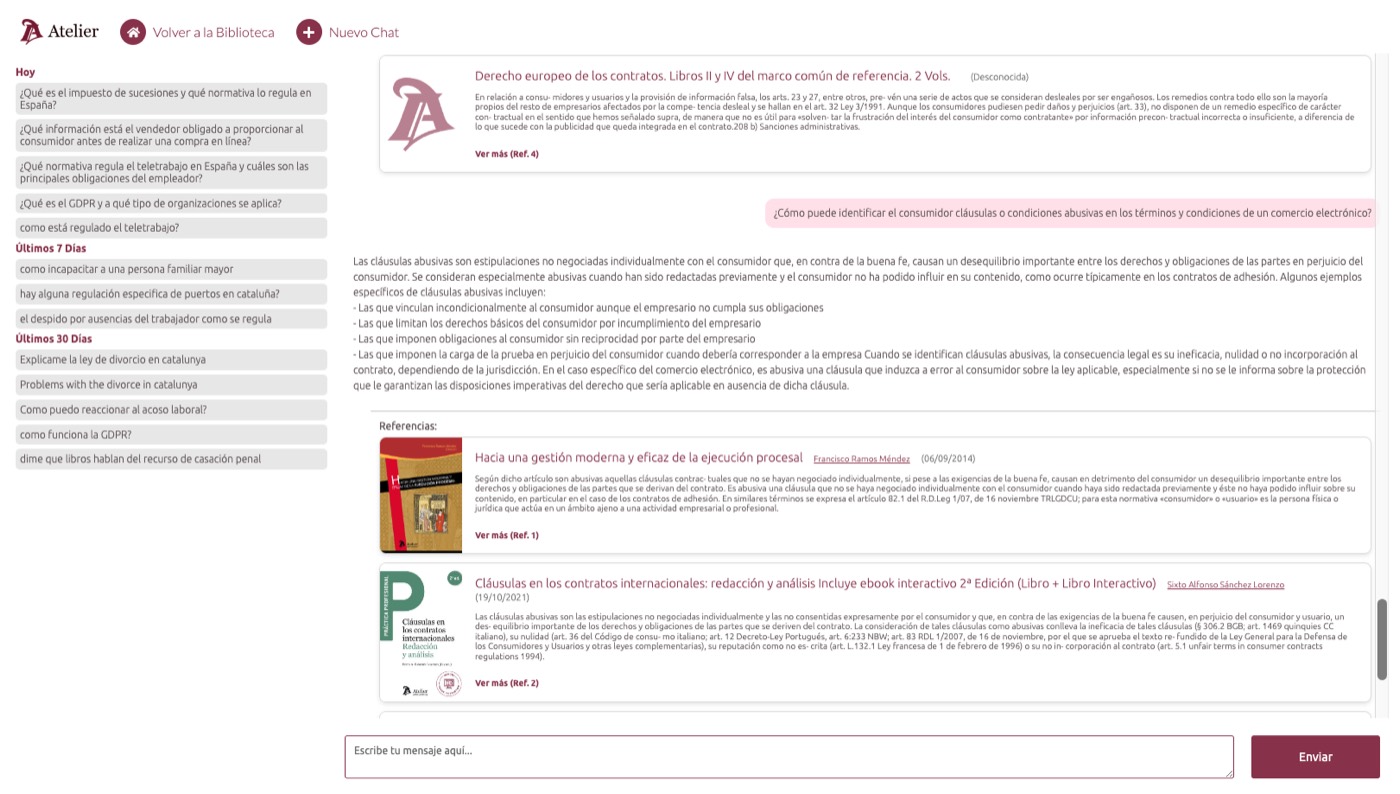 Document AI
Atelier Libros
Their digital legal library, searchable in plain language.
See the project
Document AI
Atelier Libros
Their digital legal library, searchable in plain language.
See the project
 CRM and personalisation
Norauto
Predictive models connected to their CRM operation, without changing systems.
See the project
CRM and personalisation
Norauto
Predictive models connected to their CRM operation, without changing systems.
See the project
 Loyalty
Flormar
Their customer club managed with predictive AI: more repeat purchases and a higher average ticket.
See the project
Loyalty
Flormar
Their customer club managed with predictive AI: more repeat purchases and a higher average ticket.
See the project
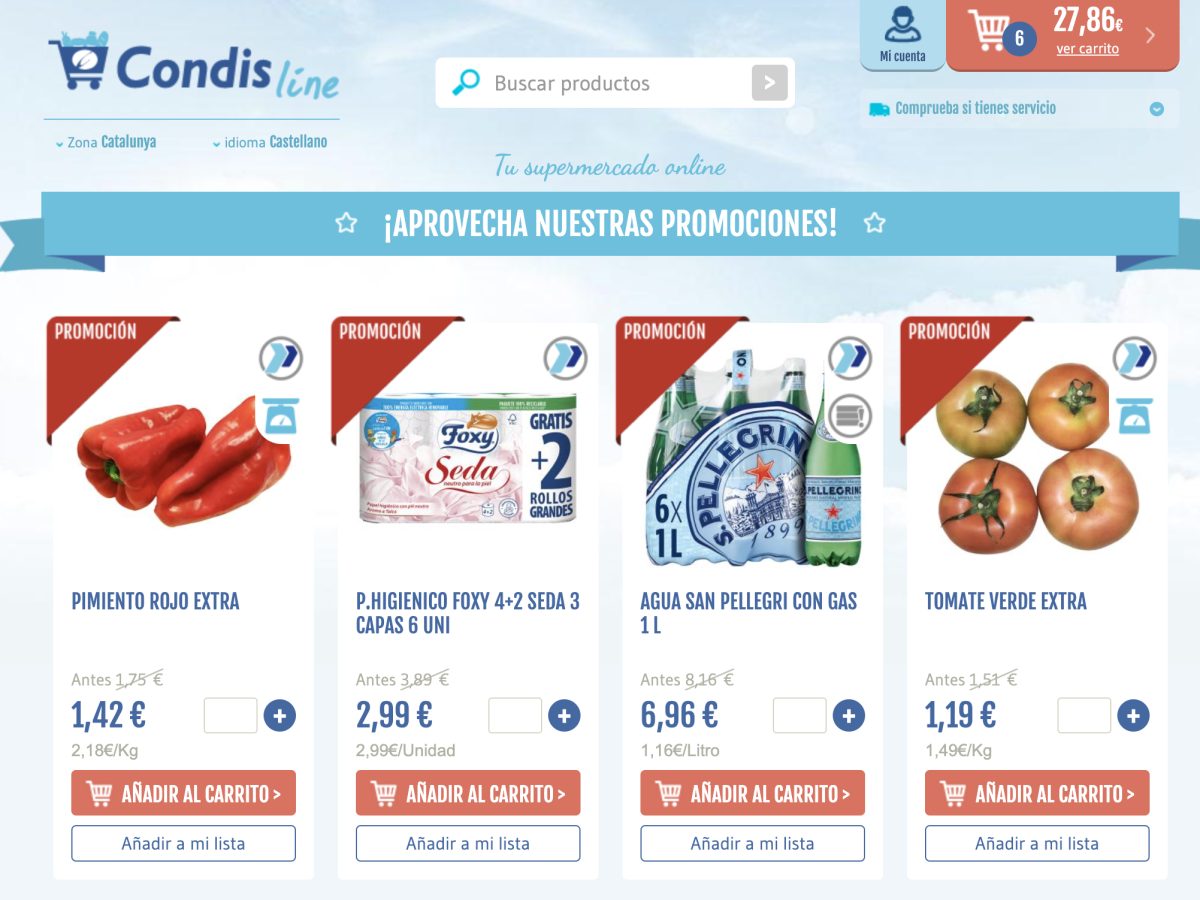 Online grocery
Condis
Real-time personalisation in the store and in their CRM communications.
See the project
Online grocery
Condis
Real-time personalisation in the store and in their CRM communications.
See the project
Shall we look at it with your case?
Tell us how your company works today and we will tell you what could be implemented first and what we would expect to change.
Frequently asked questions
What people ask before starting.
Can we skip the first phase?
Yes, if you bring the case already decided and we know where the data comes from. What we do not do is accept a case nobody has looked at closely.
Do the data need to be in order before starting?
No. We start with what there is. If a case needs a piece of data that does not exist anywhere, we say so and that case is postponed.
Do we need to change tools?
No. We work on the systems you already use. If something is worth changing, we propose it with its reason, never as a condition to start.
Who maintains it when you finish?
Your team, if it wants to and can: that is why the handover starts on day one. If you would rather we maintained it, that is possible too. The choice is yours.