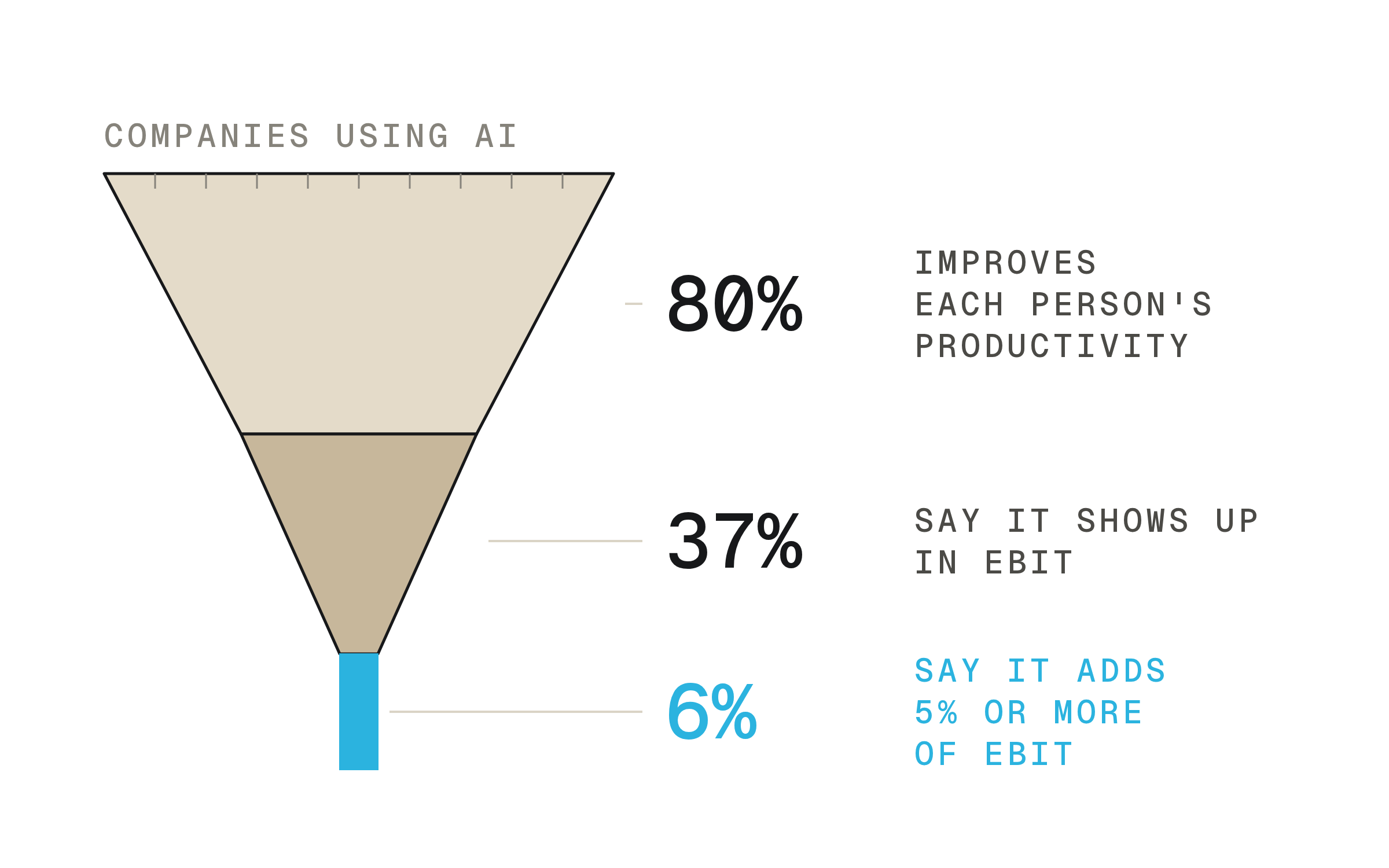
 Guides
The AI that shows up in EBIT: the 6% pattern
Why AI that replaces an invoice reaches EBIT and AI that only saves hours does not.
Guides
The AI that shows up in EBIT: the 6% pattern
Why AI that replaces an invoice reaches EBIT and AI that only saves hours does not.
What an AI implementation agency does, and how it differs from a consultancy
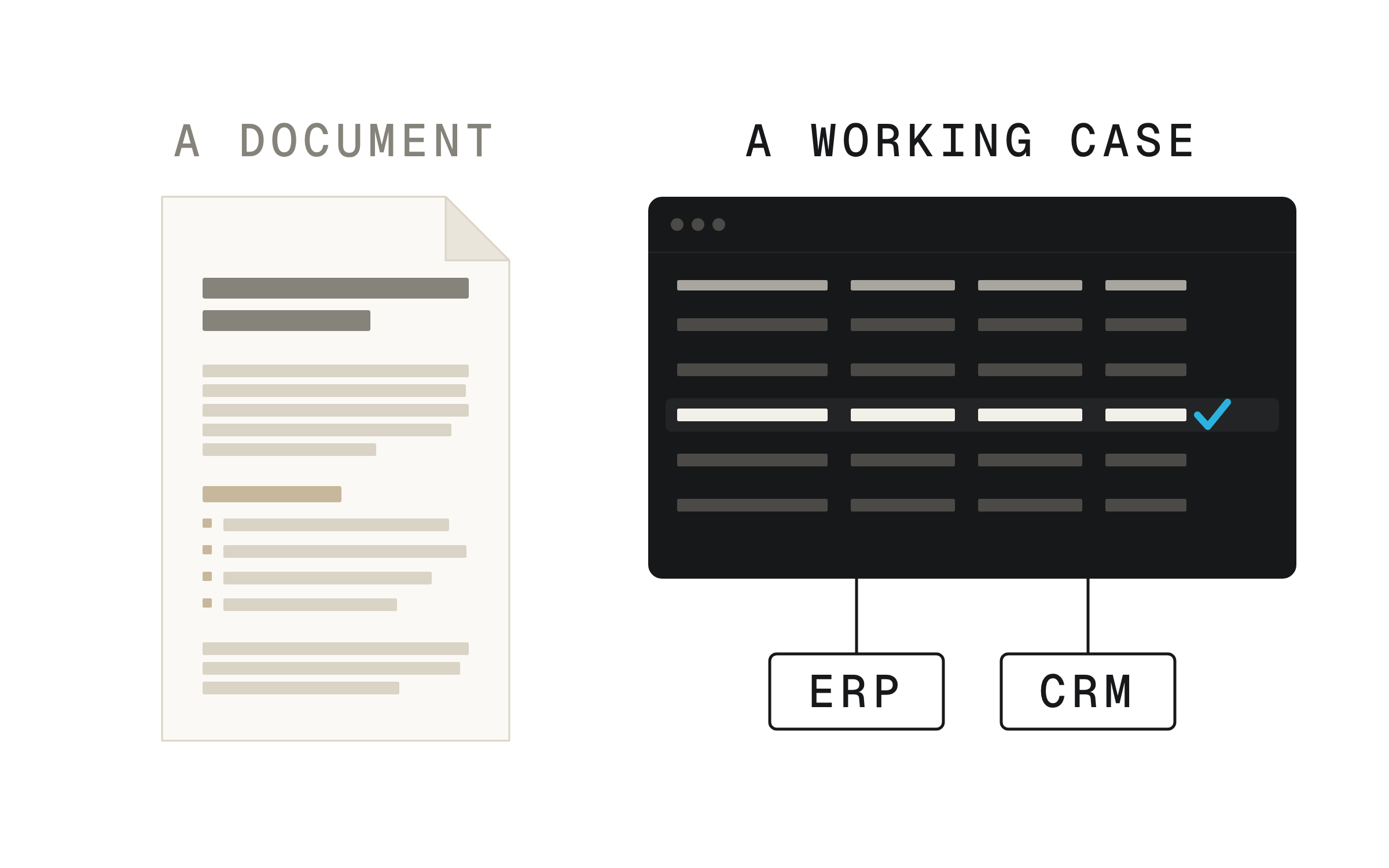
An AI consultancy hands over a diagnosis: what you could do, in what order, and with what risks. An implementation agency hands over something else: the first case running inside your systems, with your team using it every week.
The difference is not one of emphasis. It changes who touches your systems, who answers when something breaks, and what is left the day the supplier walks away.
Almost everyone says they use AI. Underneath there is usually a chat tab
Adoption figures look good and are rising fast. In Catalonia, 24.0 % of companies with ten or more employees were using artificial intelligence technologies in the first quarter of 2025, according to the ICT usage survey by Idescat. ACCIÓ measures something different —investment— and traces the same curve: 12.6 % in 2023, 24 % in 2024 and 30.4 % in 2025. Across Spain, the INE reports 21.1 % in the first quarter of 2025, up from 12.4 % a year earlier.
What those figures do not say is what «using it» means. The ONTSI does look: 45.8 % of the companies that use AI do so through off-the-shelf commercial packages, against 21.9 % that build to order. And only 2 % of companies with ten or more employees have an AI specialist on staff.
This is what we see when we sit down with a team, and it appears in no survey: almost everyone says they use AI, and when you look closely, what is there is a chat tab open beside the work. The prompt is copied over, the answer is pasted back, someone fixes it by hand, and the day goes on. That counts as using AI. And nothing inside the company has changed: not the process, not the time it takes, not what the company knows once the person who did it leaves.
That gap —between having AI and having it inside— is the whole job. And it is exactly where the two supplier models part ways.
What an AI implementation agency does
An implementation agency takes responsibility for a specific task working differently by the end. Not for recommending it: for it working.
That is judgement too, and the hardest kind to gather: technical judgement about what reaches production and what does not. You do not learn it by analysing. You learn it by having put cases into production and having had to maintain them afterwards. It is what lets you look at a task and know, before starting, whether it holds up outside a demo.
Three things are built on top of that judgement, and none of them is optional. Context: the company's own criteria written down, in a document the AI reads before every task, with the precision of a specification rather than a handbook. Tools: access to the ERP, the CRM, the document folder or the repository, with permissions by role, so the task ends where it starts and not in a copy and paste. Verification: how you know the result is right without reading all of it —a total that adds up, a format that validates, a rule that checks itself—. All three are covered in detail in the article where we explain the shift.
Around that, the work runs in three phases: choosing where to start, putting the case into production, and staying alongside until the team uses it unaided. The first phase does not end in a report: it ends in a prioritised queue of cases and the decision of which one goes first. Every case in the catalogue is described with what it takes to implement it, and two articles walk through them step by step, the five for business and operations and the five for technical teams.
That technical judgement plays out in three decisions, and all three are only made well by whoever is going to build it. Where the data lives and under which permissions, because that decides whether the case can grow or has to be rebuilt. What gets automated and what stays with a person, which you settle by looking at real errors rather than imagining them. And when a case is not worth it and has to be stopped, which is hard to say once it has been sold. A supplier who will not maintain what they design has no way of getting all three right.
What a consultancy does, and when it is exactly what you need
An AI consultancy hands over decision-making judgement and a plan: a process map, a data audit, cases ranked by impact and effort, a six or twelve month route, and often the work of guiding the change through the organisation. It is a different trade, not an incomplete version of the previous one.
And there are situations where it is the right one:
- When the decision is about the portfolio. Three departments bring twenty initiatives and someone has to decide which get funded. That is settled by ranking and comparing, not by one case in production.
- When the decision goes to a board or an investment committee. A defensible document is the deliverable, and it is a legitimate one.
- When the problem is not AI. If the data sits in five systems that do not talk to each other, what you need first is a data project. Starting with AI there is starting at the end.
- When suppliers have to be evaluated and whoever evaluates cannot be the one who then builds.
What a diagnosis cannot give you is something that works. If what you need is a specific task being done differently a few months from now, a document will not produce that on its own.
Five questions that separate one model from the other
| AI consultancy | Implementation agency | |
|---|---|---|
| What you buy | Judgement about what to do | Technical judgement to make it work, and the case working |
| What you have on the last day | A document | Something in production and a team using it |
| Who touches your systems | Nobody: they get described | Whoever designed it |
| Who answers when it breaks | Usually out of scope | Whoever built it |
| What is left when the supplier goes | Whatever the person who read the report remembers | The criteria written where the AI reads them |
If you run the business, the row that decides is the second: what you have on the last day. If you lead IT, it is the third and the fourth, because those are the ones that end up in your queue. There is a page with the full approach for each, if you run the business and if you lead IT.
And one question worth asking whichever model you choose: who owns the code and where it lives. If what gets built is not documented and in your repository, you have not bought a system.
The report that never gets executed
It is a recurring pattern: a company arrives with a diagnosis already paid for, a ranked list of cases and a twelve month route. None of it has been implemented, and it is no longer clear where it was meant to start.
It does not happen because the report was wrong. It happens for two reasons.
The first is that an AI diagnosis ages quickly. The available models change, the programming interfaces —the APIs— the plan rested on get deprecated, and the cost per operation moves enough to change which case is worth doing. Six months on, the order of the list is no longer the right order.
The second runs deeper: a diagnosis is written from what can be learned by asking, and some things are only learned by trying. That the ERP field exists but is empty in half the records. That the criteria the team says it applies are not the ones it applies. That the task that looked easiest depends on an attachment arriving by email in four different formats. None of that shows up in an interview; it shows up on the first day of building.
It is easy to see why they get commissioned: the ONTSI finds that 78.9 % of the companies not adopting AI give lack of knowledge as the reason, far ahead of any other barrier. Asking for a map is a sensible reaction. The problem appears when the map is all that gets bought.
If you already have one, do not throw it away. Take the first case on the list and test it against five questions: whether it repeats every week, whether it calls for judgement that today lives in one person, whether you can say it is right without arguing about it, whether the data it needs already exists, and whether a mistake is caught inside rather than in front of a customer. If all five are yes, that case is ready to implement and the report has done its job. If one is no, you have the answer to why it has been stalled for months.
How to tell which one you need
An implementation agency, if you already know which task takes up most of your team's time, if AI tools are already paid for and nothing shows for it, or if what you want to measure is one specific task before and after.
A consultancy, if you have to choose between initiatives from several areas, if the decision is taken by a body that needs a document, or if the data has to be put in order first.
Neither of them if nobody can explain how the task you want to automate is done well today: the first step there is taken without a supplier, and it is writing it down. Nor is it worth it if the task comes round once a quarter, because what is learned does not accumulate and the team never picks up the habit.
What we do
We are an AI implementation agency. We work in three lines: AI implementation, which means leaving cases running inside your systems; training, so the team closes that loop on its own work; and custom development, when the case calls for building something that does not exist. What we have delivered is in the projects.
And there is a first step you can take this week without us: pick the task your team repeats most often and write down how it is done well, in the detail you would use to explain it to someone starting tomorrow. If it comes out, you already have what either model needs to begin. If it does not, you have just found the real first project.
If you want to talk it through with us, tell us how your team works.
Keep reading
Guides
The AI that shows up in EBIT: the 6% pattern
Why AI that replaces an invoice reaches EBIT and AI that only saves hours does not.
 Guides
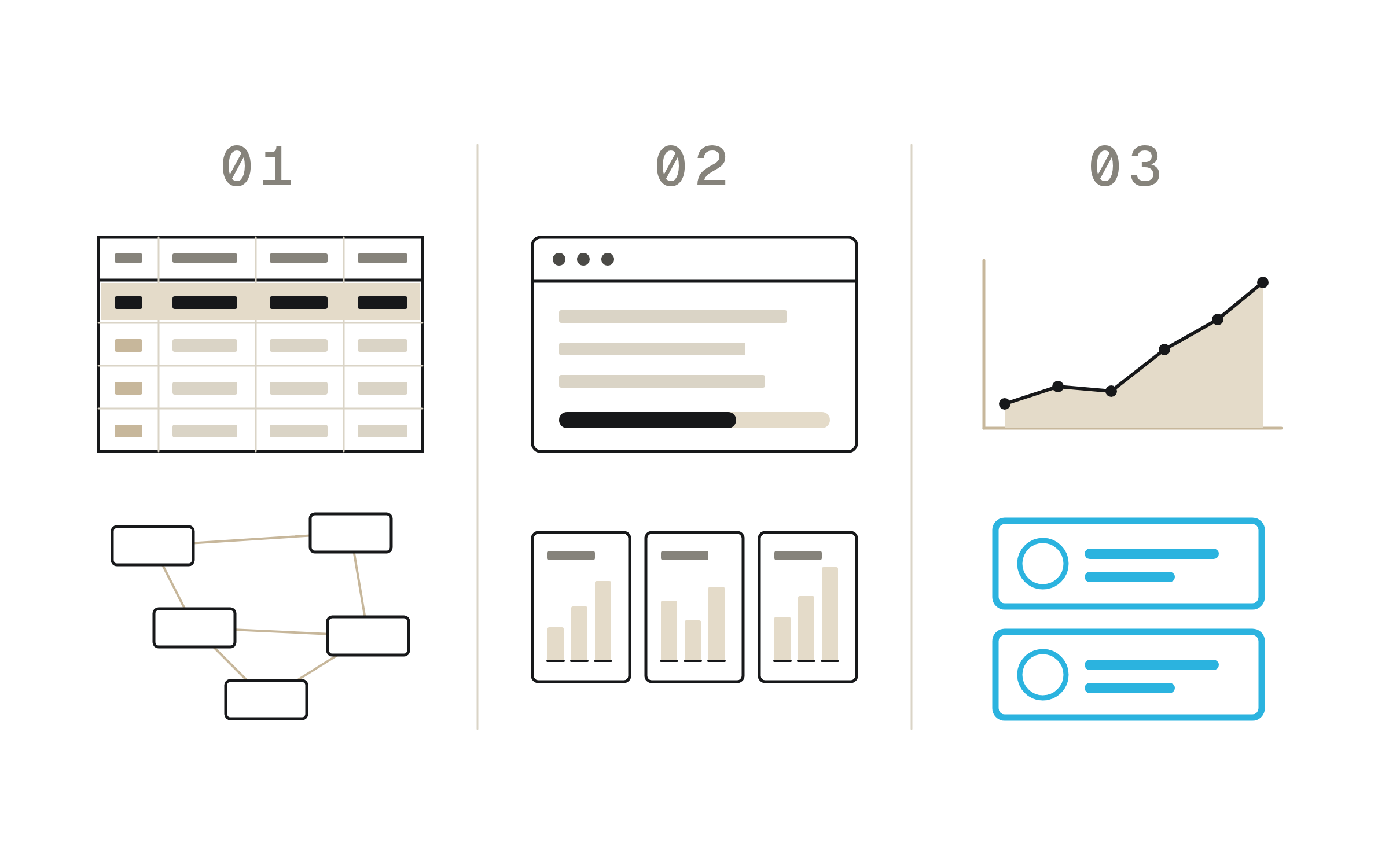
Implementing AI: the three phases and what you get
The nine deliverables of an implementation, three per phase, and what it takes from your side.
Guides
Implementing AI: the three phases and what you get
The nine deliverables of an implementation, three per phase, and what it takes from your side.
 Guides
Introduction to predictive marketing.
Use predictive analysis techniques to forecast customer behavior and optimize your marketing strategies.
Guides
Introduction to predictive marketing.
Use predictive analysis techniques to forecast customer behavior and optimize your marketing strategies.
Shall we talk about your case?
Tell us how your team works today and where it gets stuck. We look at whether there is something worth implementing and, if there is not, we tell you that too.
No commitment
You talk to the person who will do the work
If it does not fit, we tell you